
Event planners often ask me this question. Especially when they are considering hiring a magician or mind reader to perform a stage show.
The short answer is sometimes yes – but understanding why the answer is yes helps you to understand something really important about what separates a competent magician from one worth hiring. And it’s the subject of this article.
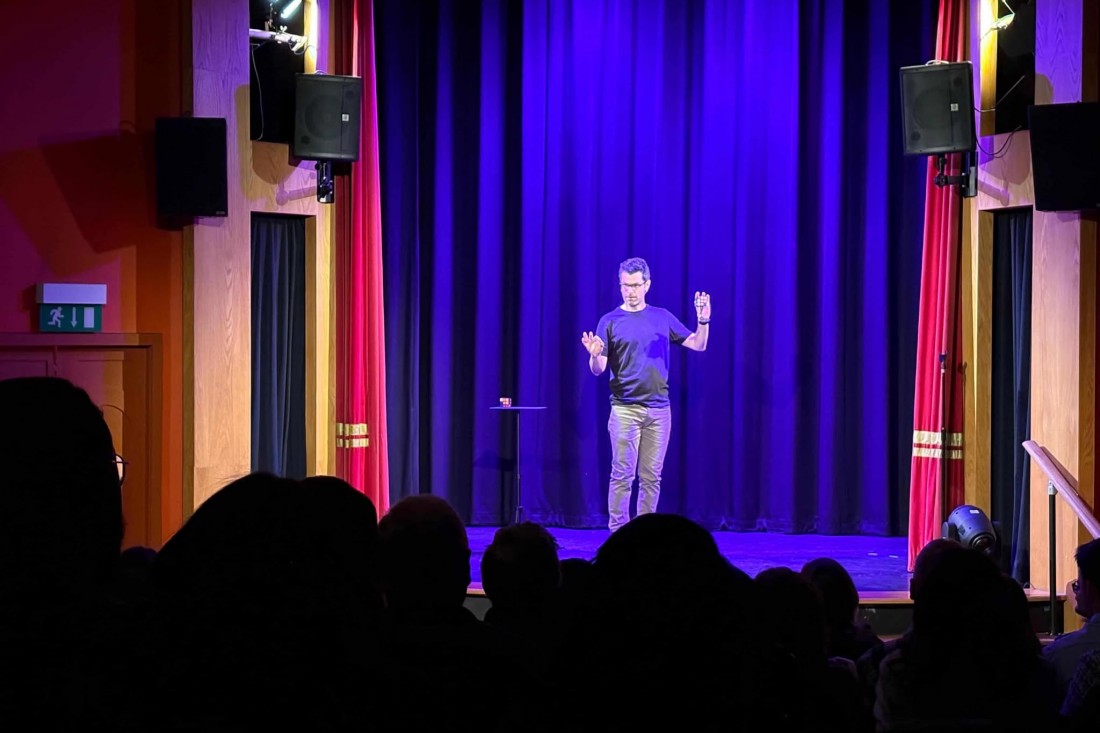
Many people believe that magic is a single skill. It is not. Close up magic and stage magic are different disciplines, and while there is some overlap, if your event is important to you then it’s right to hire someone with the ability to wow your guests with the right kind of magic.
Both styles share a single goal, the creation of impossible moments, but the techniques, the physicality, the psychology, and the performance craft involved are almost entirely distinct. A magician who has mastered one has not automatically mastered the other.
So when someone asks whether a close up magician can step onto a stage and deliver a full show, the honest answer is, some can, but most cannot.
True stage magicians like myself have put in years of additional work to learn what works on stage. Here’s where you can find out about some of my past stage shows that I’ve performed for the public. I’ve also performed several times with my after dinner show for corporate events, and for the largest celebrations.
What close up magic actually demands
Most people picture close up magic as just fun tricks. Think playing cards appearing, a coin vanishing, a borrowed ring found on a key-chain. It’s perfect to break the ice during the early parts of an event. Think cocktail reception, and welcome.
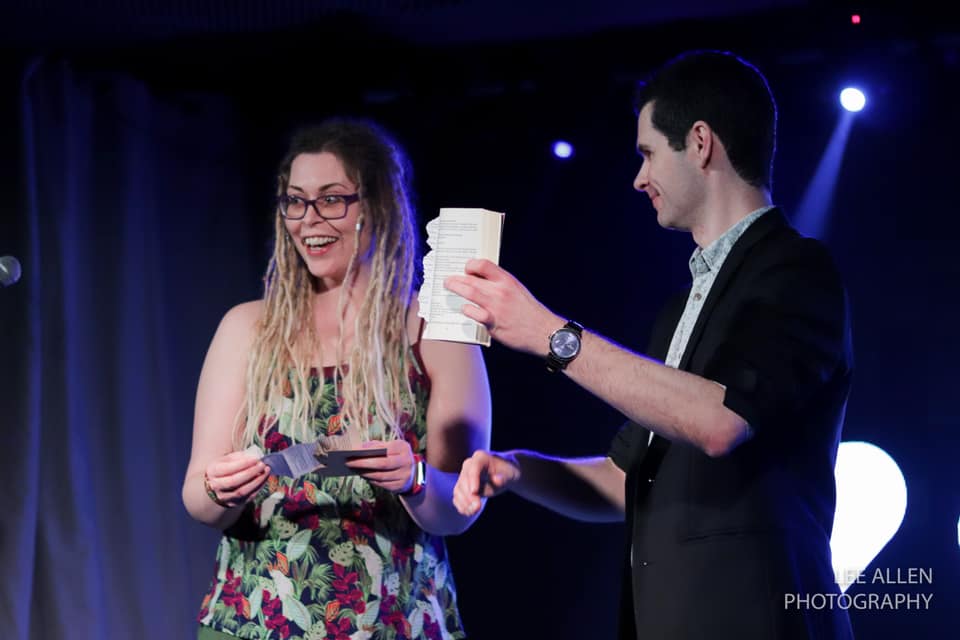
However, the mechanics of those magic moments are only a fraction of the job. The real work of close up magic happens socially. A close up magician walks into a room of strangers, sometimes a wedding reception, sometimes a corporate drinks hour, sometimes a private dinner, and only has about thirty seconds to build enough trust and warmth to grab people’s attention.
There is no stage to create separation, no microphone to claim authority, no spotlight to signal that something important (and impossible!) is about to happen.
When I perform this style of magic, I like to think of it as providing a small personal show to each group. I restart from scratch earning every applause, every laugh, table by table, group by group, over the course of an entire evening.
And I do that by creating moments guests feel a part of. My magic is conversational, and responsive, and that helps me to connect with people. Close up magic happens in a shared space, and so for me it makes sense that the performances are shaped by them.
It’s why I get comments like the one below:
★★★★★
Ed is a great magician who ensures he tailors the experiences appropriately to his guests. He is super friendly, very talented, and funny too! We’re still reminiscing on a fab night.
Annie Leatham · Close up magic · Corporate Event

What stage magic demands on top of that
Stage magic begins where close up magic ends and then keeps going. The skills transfer, rapport, timing, reading an audience, etc. but… they have to be scaled and reshaped for a completely different context.
On stage, the magician is no longer working with three people gathered around a table. There might be three hundred, or more.
A shot of honesty: some magicians have zero experience performing for large groups. If you’re looking to hire a stage magician, make sure you check their website for videos, photos, reviews, and reach out to them about your event, they should be able to answer all your questions with ease.
The physical language has to change: gestures become larger, pauses longer, reactions broader, because the person in row twelve needs to feel as connected to the moment as the person in row one.
Stage performance also draw on disciplines that close up work rarely requires. Structured comedy. Theatrical timing. How to hold a microphone and perform magic at the same time. Knowing how to build a narrative arc across twenty-five to forty-five minutes so that the final moment of the show lands with the weight of everything that came before it. On stage, personality and the presentation of the magic and mind reading, is vastly more important than ‘the trick’.
The route to those skills is not a course or a masterclass. It is years of performing in front of audiences who are not paying you, at open mic nights and free community events, in rooms where failure has low stakes and the lessons are high. Failure in practice is how craft develops.
In fact, it’s what I spoke about in my TEDx Talk, which you can see here (opens in a new tab). I even got a standing ovation at the finalé.
Over the years, I’ve picked up these skills through hosting my own regular magic show, The Magic Room, and my past events including fringe shows, theatre performances, and festival bookings.
And if you are looking to hire a stage magician for an upcoming awards night presentation, training conference, celebration, or something else then I would love to be involved.

What this means when you are booking entertainment
For event planners, this distinction is practical. A magician who performs exclusively at the close up level will often struggle if thrown into a stage environment without preparation. The words deer and headlights come to mind.
Stage performances of magic and mind reading are a genuinely different skill that requires specific development and pre-event preparation.
In short, when you’re looking to hire a magician for an event, ask the right questions. If you’d like to ask me about your event, you can get in touch to check my availability here.
And the question to ask when enquiring about a magician for an event that includes both a mingling period and a formal stage show is not simply can you do both? It is how long have you been doing both, and what does that look like?
The honest answer to the original question
Performing both close up magic at a high level and a full professional stage show requires two separate bodies of expertise, developed over time, in front of real audiences. Most magicians specialise in one. A small number of magicians like myself, develop both.
That dual capability is genuinely useful. Practically it offers variety to my work, more sustainability for my business, and the confidence to step up to the mic (literally) should someone require a short gap filler.
And for events that move through different formats, for example a drinks reception followed by a formal dinner and a stage segment, the magician already understands the room before stepping onto the stage. The relationship with the audience is already established. That changes everything about how the show lands.
If you are planning an event and want to talk through what would work best, close up magic, a stage show after dinner, or a combination, get in touch here and we can work out the right format together.
Once I have all the details, I’ll always provide an accurate no obligation quote, and all the information you need to make an informed decision.
You can also read what past clients have said here or to get a sense of how each format works in practice, see video of close up magic here and or stage magic here.
1 thought on “Can a Close Up Magician Do a Stage Show? What Event Planners Need to Know.”